
Joan Robinson and the Teaching of Economics
Published:
Originally published in La Rotonda (in Spanish).
A widely quoted remark by Professor Joan Robinson prompted me to reflect on the responsibility that university students bear toward their own society:
“How would I like to reform teaching? First and foremost, let us dispense with those who only want to pass the exam.”

A few years ago, while attending a Macroeconomics lecture, I heard a name I had not come across before. Joan Robinson was, perhaps, the most brilliant economist of the twentieth century. Back in the 1930s she collaborated academically with Keynes himself, earning acknowledgment in the preface of the most influential economic work of the last century: The General Theory of Employment, Interest and Money (1936). Robinson was part of the famous Cambridge Circus, alongside other distinguished economists such as Piero Sraffa, Richard Kahn, and Nicholas Kaldor. The contributions this group made to economic science are of vital importance. Over the course of her academic career, Professor Robinson addressed a wide range of topics — imperfect competition, economic development, capital theory, and the teaching of Economics — a subject that, personally, helped me discover the diversity of theoretical perspectives that coexist within the discipline.
I had been at the faculty for almost two years and, although my performance was satisfactory, I felt a profound dissatisfaction with the education I was receiving. This was not a reflection on the professors themselves. I believe that, despite all its difficulties, San Marcos is home to faculty of great quality and distinction. My main concern was whether the models being taught were truly applicable to Peruvian reality, or whether they amounted to nothing more than “pencil-and-paper economics” (Georgescu-Roegen, 1970). And time and again, I returned to the same starting point. What had motivated me to study Economics in the first place was, precisely, the desire to change our social world (Figueroa, 2008). Along the way I met classmates who shared that same unease. Sometimes answers are not found in the same place where questions arise. And so we began a journey outside the university classroom and discovered a completely unknown universe. The Economics we had known up to that point was nothing more than the theoretical construction of a single school of thought: the neoclassical.
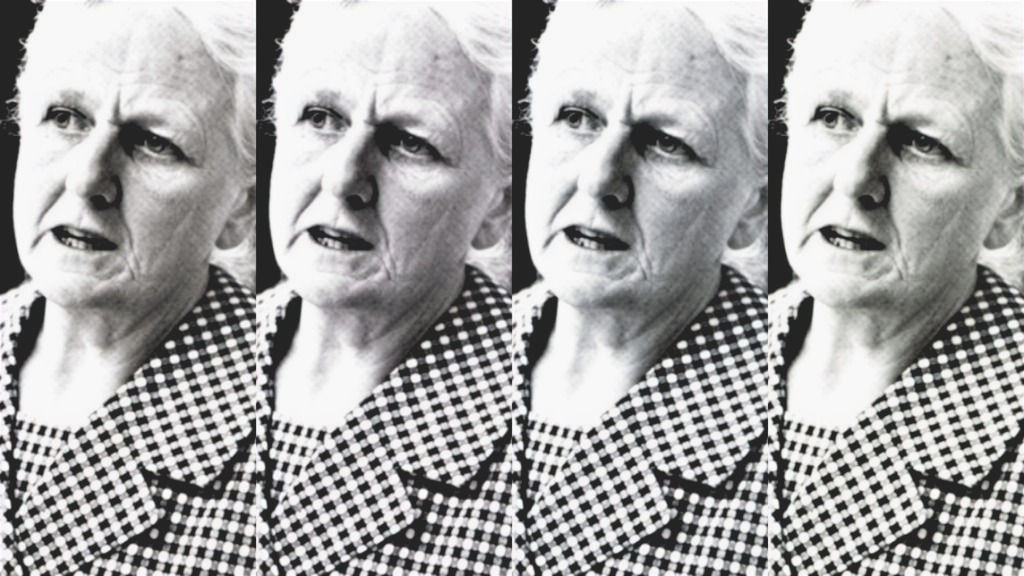
Joan Robinson’s celebrated essay “The Teaching of Economics: The Indian Route” was the first impulse that allowed me to see beyond conventional economics. The renowned Cambridge professor was asking herself the very same questions. It was common to see that many of the most outstanding students at Cambridge came from developing countries. From her position as a teacher, she asked herself: “Is what we give them useful for development?” In her article, Robinson observes that if talent is distributed equitably across the population, it is highly probable that one would find ten brilliant young people in India for every one raised in Great Britain. It is clear that the social environment shapes motivations and decisions. It was therefore natural to see many of these talented individuals drawn to economics, given that economic and social problems carry great weight in the places they come from. Yet these humanitarian impulses became distorted as they progressed through their studies. So much so that “for most, the pill turns out to be too bitter, and they cling desperately to a few fragments of what they have learned, since no other way of articulating the vaguely well-intentioned feelings that drove them at the outset has been offered to them.” The student continues to advance through increasingly unfamiliar terrain, and when they dare to question the education they are receiving, they discover that “the prestige of teachers and books weighs heavily on the conscientious student.” The aspiration to transform that generous impulse into mechanisms capable of lifting their society out of underdevelopment fades away irretrievably, and the student “[…] ends up not as they entered, but at an exit that leads nowhere near where they were going.”
Reading Joan Robinson’s article, I felt a deep sense of identification. Our discipline carries an enormous social responsibility, and it is we economists who are called upon to propose solutions in the face of an ever-changing world. In this sense, economic theories are in constant evolution, regardless of which camp they belong to. Orthodox and heterodox economists alike confront a world of growing complexity. Both sides acknowledge that “[…] the regularities we find in Economics do not carry the ‘eternal’ validity of the constants of nature” (Meller, 1978). Even so, curricula appear to be largely uniform across universities worldwide. Economics students are trained under the same theoretical guidelines, despite the fact that those guidelines depend heavily on the reality in which they were conceived. In some cases, it is very hard for us to leave this imaginary world behind. And as Professor Adolfo Figueroa puts it with characteristic irony: “when the theory is inconsistent, it is not the theory that fails — it is reality.”
That was the mindset of many economists who believed in the perpetuity and timelessness of their theories and models.
Joan Robinson brought the issue to the forefront of debate and sought, in some measure, to reform the teaching of Economics. Her ideas did not remain in the past. At the turn of the century, a movement emerged that attracted considerable attention in academic circles. In 2000, economics students at La Sorbonne — the historic university of France — denounced the type of instruction they were receiving, which was predominantly grounded in the neoclassical approach. Their famous open letter centred on three main points: (i) an economics closer to reality; (ii) a proportionate use of mathematics; and (iii) a more pluralistic economics in university curricula. In 2011, a group of Harvard University students wrote an open letter to Professor Gregory Mankiw expressing their concern about the education provided in an introductory Economics course, which was based primarily on a selected set of textbooks offering a limited view of the discipline. A growing number of intellectuals and economists believe in the need for a pluralist perspective — one that allows us to engage as closely as possible with our own reality. Recognising economics not as a discipline sealed off from others is the first step. It must draw on other fields of knowledge in order to broaden its horizon. Only then, as Joan Robinson used to say, will we be equipped so as not to be deceived by economists.
References
Cataño, J. F. (2001). Discusión francesa sobre la enseñanza de la economía. Cuadernos de Economía, (35), 287–296.
Concerned Econ 10 Students. (2011). “An Open Letter to Greg Mankiw.” Harvard Political Review (online), November 2.
Figueroa, A. (2008). Nuestro mundo social: introducción a la ciencia económica. Libros PUCP.
Georgescu-Roegen, N. (1975). Energía y mitos económicos. El trimestre económico, 168(4), 779–836.
Meller, P. (1978). Algunas críticas a la metodología de la ciencia económica. Estudios de Economía.
Robinson, J. (1988). La enseñanza de la economía: la ruta de la India. Ensayos Críticos, Orbis, Barcelona.